
Written By Matt Fletcher
On 14 December 1934, Toni Mancini walked out of Lewes Assizes a free man. He had admitted concealing the body of his partner, Violette Kaye, inside a trunk, moving it across Brighton and lying about her whereabouts. Yet when asked whether he had murdered her, the jury's answer was clear: not guilty.
More than forty years later, the story took an extraordinary turn. Mancini publicly confessed to causing Violette's death.
How did a man who admitted to hiding a body escape conviction for murder, and why could nothing be done when he eventually confessed?
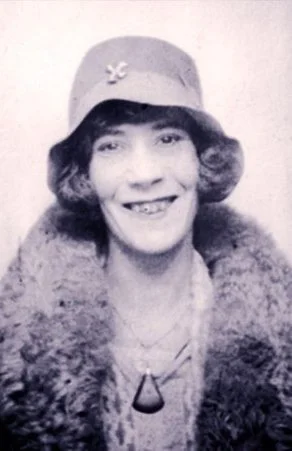
Figure 1: Violette Kaye (on the right), also known as Violet Saunders, whose disappearance in May 1934 became central to one of Brighton's most notorious murder investigations.
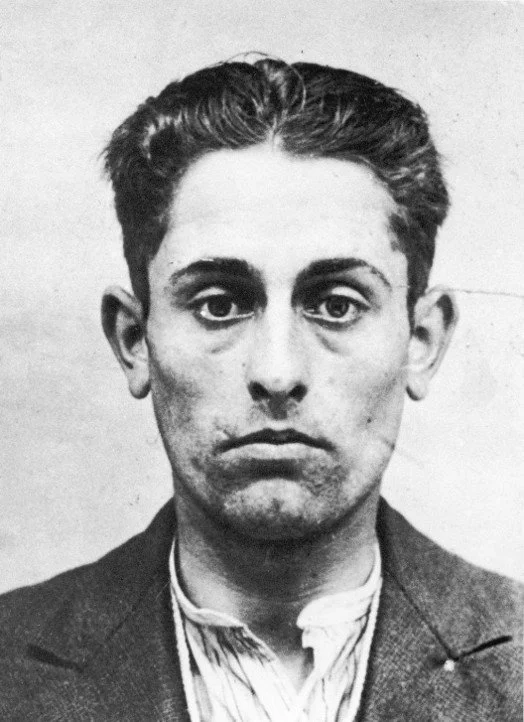
Figure 2: Toni Mancini, who was acquitted of Violette Kaye's murder at Lewes Assizes in December 1934. More than forty years later, he publicly confessed to causing her death.
Violette Kaye and Toni Mancini
Violette Kaye, also known as Violet Saunders, was 42 years old and had previously worked as a dancer. By the 1930s she was also involved in sex work. In 1933 she moved from London to Brighton with Toni Mancini, a younger man who used several different names.
The couple lived together at Park Crescent, Brighton. Their relationship was apparently turbulent, and Violette was last reliably seen alive on 10 May 1934, reportedly appearing distressed.
The following day, Violette's sister received a telegram suggesting that she was going abroad. Mancini also began telling people that Violette had left Brighton for Paris.
She had done nothing of the sort.
Mancini moved to new lodgings at 52 Kemp Street, close to Brighton Railway Station. Among the possessions transported to his new address was a large and unusually heavy trunk.
Inside was Violette's body.
Another Brighton trunk
Violette's body was discovered while Brighton Police were investigating another mysterious death.
On 17 June 1934, a trunk containing the remains of an unidentified woman was discovered at Brighton Railway Station. Further remains were found at King's Cross Station in London the following day.
This was a separate case, but the discovery prompted a major police investigation into the disappearance of women in Brighton. Despite the similarities between the discoveries, no connection between the two killings was established.
As officers followed up reports of missing women, their attention turned to Violette Kaye, who had not been seen since May. Despite Mancini's claims that she had gone to Paris, questions remained about her disappearance.
On 15 July 1934, police searched Mancini's lodgings at 52 Kemp Street.
There, they discovered a second trunk containing Violette's body.
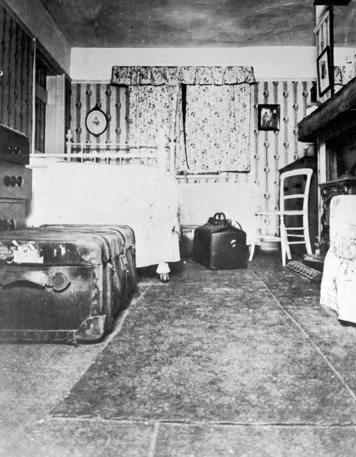
Figure 3: A historical photograph associated with accounts of the Brighton Trunk Murders. The original archive caption and location have not yet been verified.
There was little difficulty establishing the identity of this victim. Police now had Violette's body, a suspicious disappearance and a man who had lied about where she had gone.
Mancini fled Brighton but was arrested in south-east London shortly afterwards.
The question was no longer whether Violette was missing. It was whether the police could prove that Mancini had killed her.
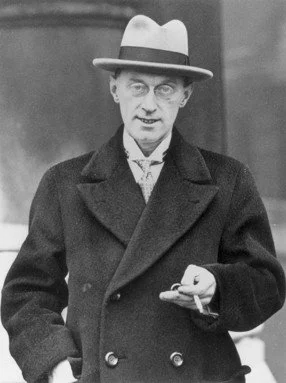
Figure 4: Norman Birkett, the distinguished barrister who defended Toni Mancini at Lewes Assizes, successfully challenging aspects of the prosecution's evidence.
“I found her dead”
Mancini did not deny concealing Violette's body.
Instead, he offered an extraordinary explanation.
He claimed that he had returned to their home and discovered Violette already dead. Fearing that his criminal record would make him the obvious suspect, he panicked. Rather than contact the police, he concealed her body in a trunk, moved it to Kemp Street and told friends and acquaintances that she had gone away. He also suggested that another man might have been responsible for her death.
It was certainly suspicious behaviour, but suspicious behaviour alone was not enough to convict someone of murder.
The prosecution would have to prove beyond reasonable doubt that Mancini had caused Violette's death.
His trial opened at Lewes Assizes on 10 December 1934. Facing a possible death sentence, Mancini was defended by one of the leading barristers of his generation, Norman Birkett.
The battle over the evidence
At the centre of the prosecution's case was the medical evidence.
The renowned Home Office pathologist Sir Bernard Spilsbury had examined Violette's remains. The prosecution argued that she had died following a violent blow to the head.
Birkett attacked that conclusion.
The defence challenged the medical evidence, suggesting that Violette’s injuries might have resulted from a fall rather than a deliberate attack. Evidence concerning morphine found in her body was also used to cast doubt on the prosecution’s interpretation of her death. Birkett suggested that another person could have been responsible.
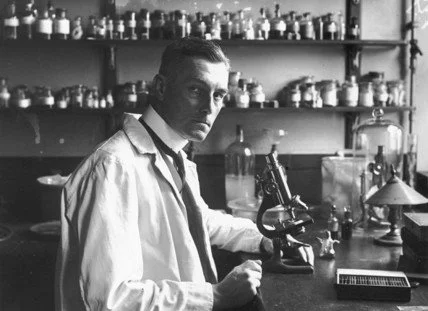
Figure 5. Sir Bernard Spilsbury, the renowned Home Office pathologist whose medical findings became a central point of dispute during Mancini's murder trial.
There were other difficulties for the prosecution. Clothing said to contain incriminating bloodstains was challenged by the defence, while witnesses described Mancini and Violette as appearing affectionate together, allowing Birkett to question the prosecution's suggested motive.Mancini himself gave evidence and maintained that he had found Violette dead.
The defence did not have to prove that this extraordinary story was true. It simply had to create reasonable doubt about the prosecution's claim that Mancini had murdered her.
After deliberating for around two and a quarter hours, the jury returned.
Not guilty.
Mancini was free.
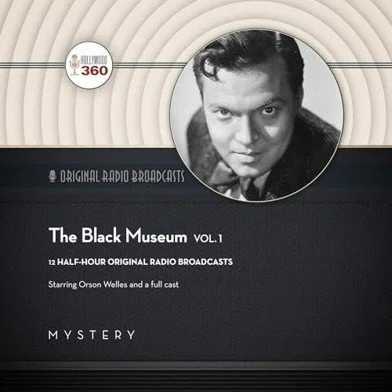
Figure 6. The Black Museum, the 1950s crime radio series narrated by Orson Welles. The episode The Hammerhead drew inspiration from the Brighton Trunk Murder, adapting the real case for dramatic entertainment.
From courtroom to radio drama
The Brighton Trunk Murders captured the public imagination long after the investigations ended.
In the 1950s, the Mancini case provided inspiration for an episode of The Black Museum, the crime radio series narrated by Orson Welles. Each programme used an object associated with a real criminal case as the starting point for a dramatised story.
Mancini's case became The Hammerhead.
However, the programme was entertainment rather than documentary. Details were changed and the radio drama offered a fictionalised account of Violette's murder.
It is an interesting example of how quickly real crimes can move beyond police files and courtrooms and become part of popular culture. The distinction between the historical event and the story subsequently told about it can easily become blurred.
But the real case still had one final chapter.
A confession, 42 years later
In 1976, Mancini spoke to a News of the World journalist and admitted that the account he had given at his trial was false.
According to his new version of events, he and Violette had become involved in a violent argument. Mancini claimed that Violette attacked him with a hammer used for breaking coal. He took the hammer from her and, when she demanded its return, threw it towards her.
According to Mancini, the hammer struck Violette in the temple, killing her.
Whatever Mancini's attempt to explain the circumstances, he was now admitting something he had denied before a jury in 1934: that he had caused Violette's death.
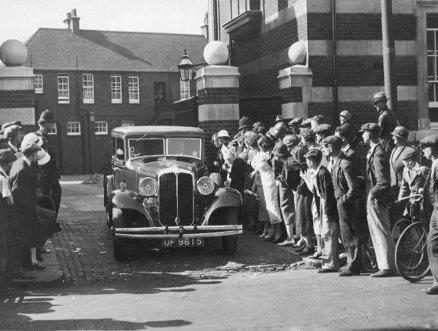
Figure 7: A historical photograph associated with accounts of the Brighton Trunk Murders. The original archive identification, date and location require verification.
Yet there would be no second murder trial.
At the time, the principle of double jeopardy generally prevented a person who had been acquitted from being tried again for the same offence. A possible prosecution for perjury was considered following Mancini's confession, but was not pursued because of the lack of corroborating evidence.
English law has since changed. Under provisions of the Criminal Justice Act 2003, which came into force in 2005, people previously acquitted of certain serious offences, including murder, may face a retrial if new and compelling evidence emerges. Such cases require the consent of the Director of Public Prosecutions and authorisation by the Court of Appeal, which must also consider whether a retrial is in the interests of justice. The legislation can apply to acquittals that occurred before the law changed.
Mancini had escaped the gallows in 1934. More than four decades later, even his own confession could not undo the verdict.
Beyond reasonable doubt
With hindsight, it is tempting to look at Mancini's acquittal and conclude that the justice system simply failed.
But the case raises a more difficult question.
A criminal court does not decide whether someone appears suspicious. Nor does an accused person have to prove their innocence. The burden rests with the prosecution to establish guilt beyond reasonable doubt.
In 1934, the jury could only reach its decision using the evidence presented before it. Norman Birkett successfully persuaded its members that important parts of the prosecution's case could be questioned. Whatever suspicions surrounded Mancini, suspicion was not enough to send a man to the gallows.
The two Brighton trunk cases of 1934 therefore present an extraordinary contrast.
In the first, police had a victim but could not discover her name or identify her killer.
In the second, they knew the victim, identified a suspect, recovered her body and brought that suspect before a jury, yet they could not prove murder beyond reasonable doubt.
Violette Kaye’s story would eventually acquire something the unidentified woman never received: an admission of responsibility from the man who had been acquitted of her murder. But it came more than forty years too late to change the verdict reached at Lewes.
The case leaves us with an uncomfortable question that remains relevant to criminal justice today.
When suspicion points strongly towards one person, but the evidence leaves room for doubt, what should justice require?